
Axolotl lab to support human health research

A new research facility dedicated to axolotls – remarkable creatures known for their ability to regrow limbs and organs – is set to open at the University.

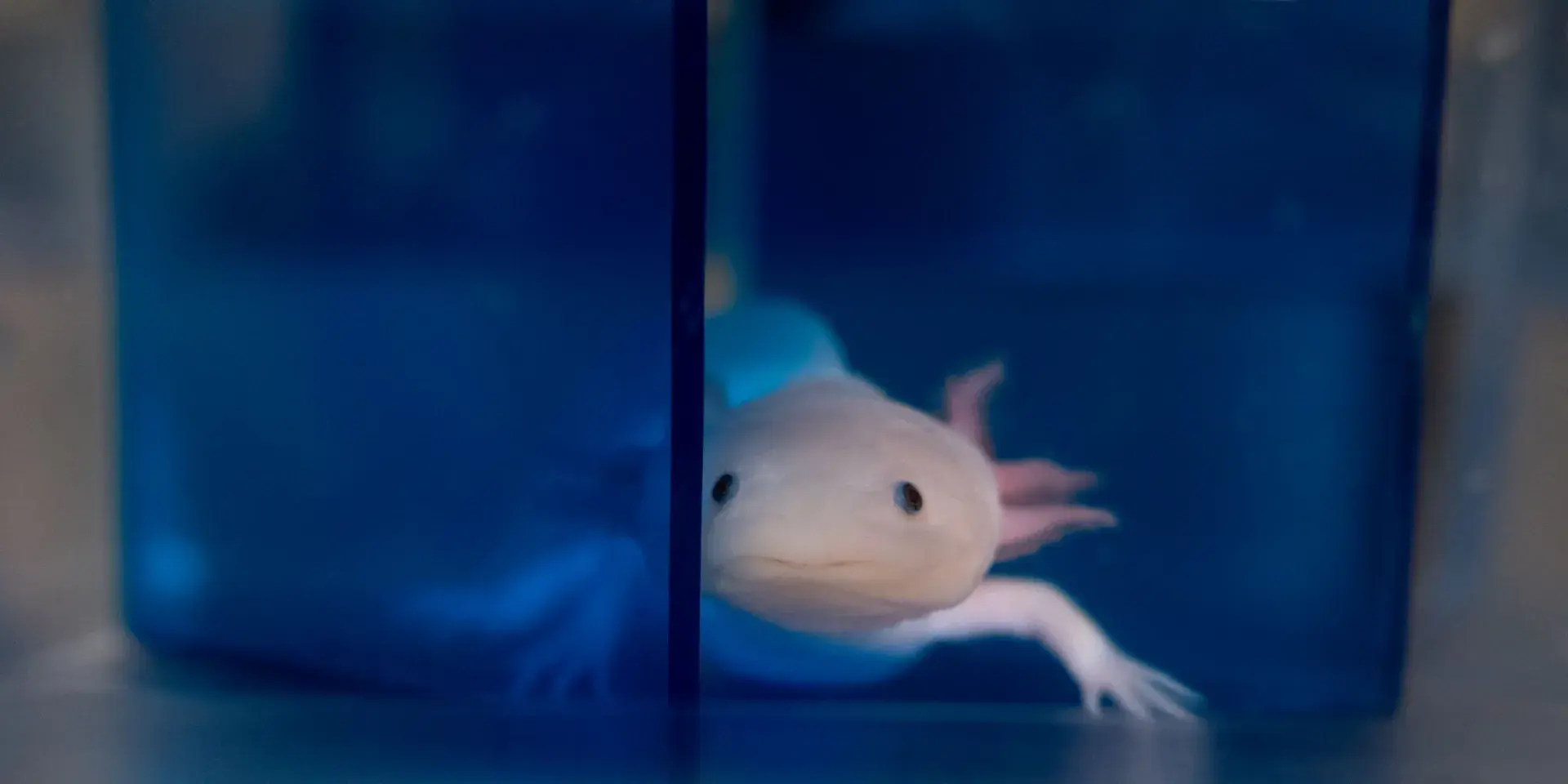
Axolotl pictured in water tank looking out from blue tunnel

The new facility will house the UK’s only dedicated axolotl research colony, supporting world-class studies into regeneration, ageing, cancer resistance and stem cell biology.

The project, funded by UKRI Biotechnology and Biological Sciences Research Council (BBSRC), is one of 31 awards made in the latest round of BBSRC’s ALERT funding. 

Regenerative research

Axolotls are a species of salamander native to Mexico. They can regenerate limbs, the spinal cord and even parts of the brain. This unique biology offers powerful insights into how humans might one day repair or regenerate damaged tissues following injury or illness. 

Spinal cord injury in humans can lead to permanent loss of feeling and movement, with no effective treatments. Someone in the UK is paralysed by a spinal cord injury every 4 hours.

Scientists will investigate how stem cells – essential for growth and repair in both axolotls and humans – are activated to restore spinal cord function in axolotls.

This facility will allow us to study one of nature’s most extraordinary animals in a controlled, ethical and sustainable way. 

What we learn from axolotls could one day help us unlock new treatments for everything from spinal cord injuries to degenerative diseases.

Cancer resistance

As well as their unusual regenerative properties, axolotls rarely develop cancer, making them a powerful model for studying the disease.

Researchers hope to uncover new insights into their natural cancer resistance, potentially inspiring new treatments to prevent the development of tumours in humans.

Ethical care

All research will follow rigorous ethical standards, with the welfare of the animals a top priority and a strong focus on the 3Rs – Replacement, Reduction and Refinement.

Experts at the University’s Bioresearch and Veterinary Services (BVS) will also undertake studies to better understand and improve axolotl welfare, including how environmental enrichment impacts behaviour. This will enhance the quality of axolotl research data and advance best practice worldwide.

Axolotls thrive in a laboratory environment but are critically endangered in the wild. The animals at the new facility come from an established lab in Europe.

Their critically endangered status makes the import of research axolotls challenging due to international regulations. Establishing a secure, well-regulated UK colony will reduce reliance on imports, boosting future regenerative biology research across the UK.

The facility will also help raise awareness of axolotl conservation efforts and the potential of unconventional species to reveal new biology to improve human health.

Unlocking discovery

This latest ALERT funding round marks a milestone for BBSRC, with more than 300 awards made to support cutting-edge equipment since the scheme began in 2013. 

The 31 investments, totalling more than £27 million, will enable transformative research across bioscience, from sustainable agriculture to neuroscience, regenerative medicine and beyond.

This investment strengthens the UK’s bioscience capability by investing in advanced research equipment, enabling transformative science and fostering collaboration. 

In doing this, we are supporting world-class infrastructure that drives discovery and innovation essential to deliver real-world impacts and transform lives.

Tags

2025
animal research
Future of Health and Care
Research