War, displacement and social unrest are explored in a new exhibition bringing together artists responding to a world experiencing rapid change.
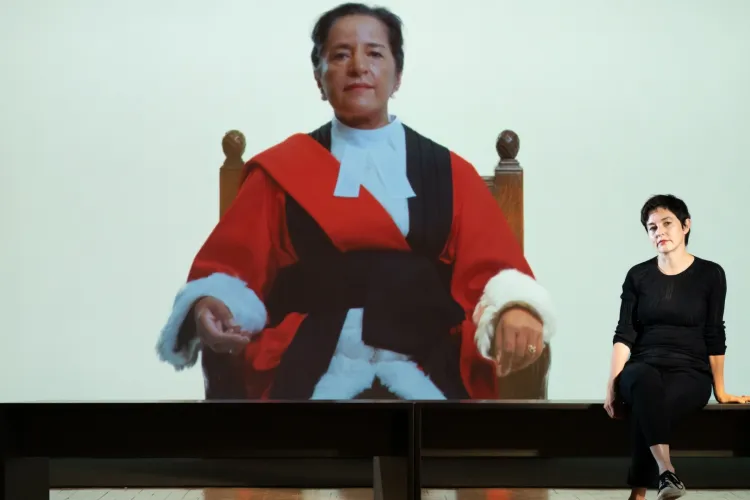
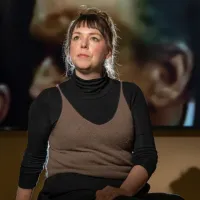
Artist Carey Young explores how institutions shape behaviour and how women encounter and exercise power in her film 'Appearance' (photo by Aly Wight).
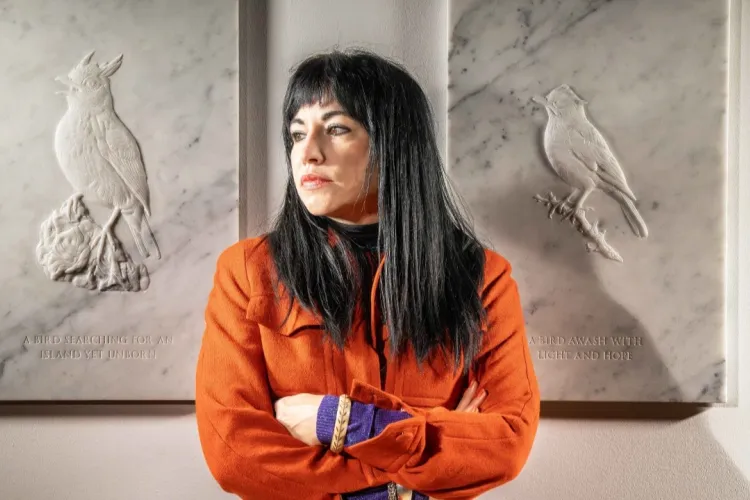
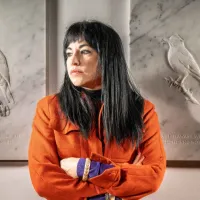
Artist Jasmina Cibic pictured with the equisitely carved marble reliefs from her piece 'Dawn Chorus' (photo by Aly Wight).
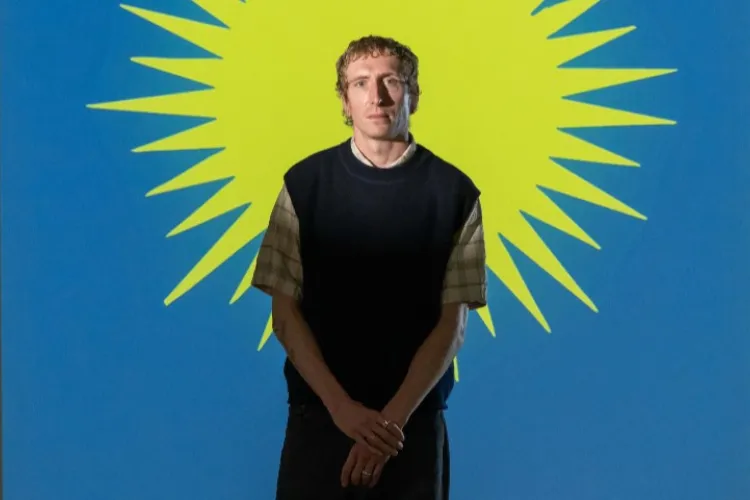
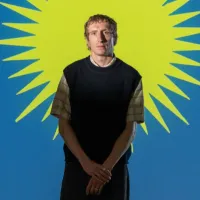
Artist Eoghan Ryan's 'Terrible Simplifiers' explore how public signs and symbols can often be reduced to divisive slogans (photo by Aly Wight).
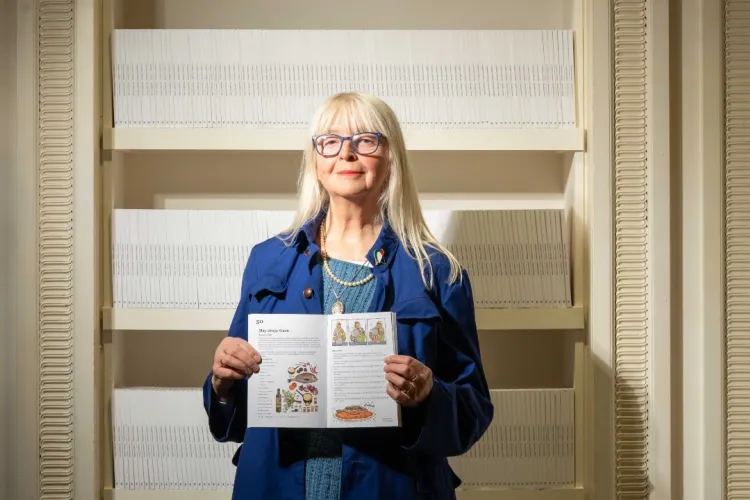
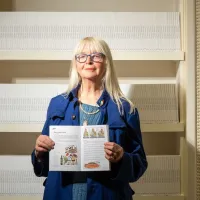
Claudia Zeiske honours the food and cultures of communities experiencing conflict in 'Combat Culture', illustrated by Edinburgh College of Art students (photo by Aly Wight).
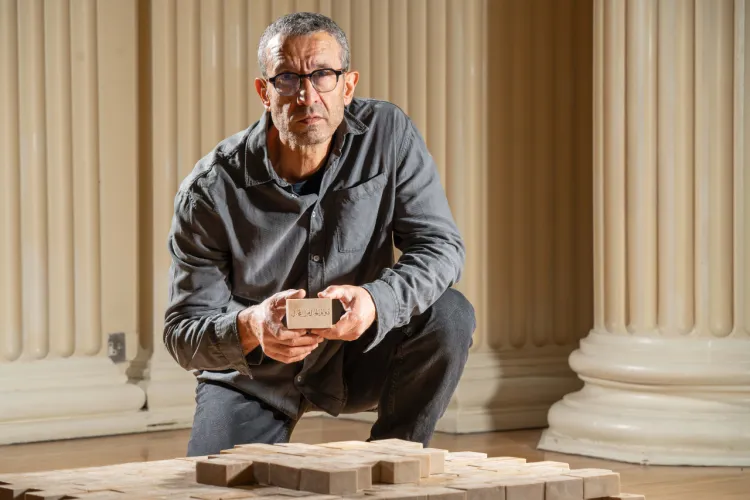
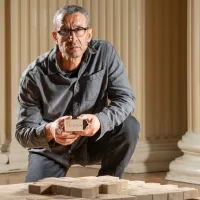
Taysir Batniji’s sculpture ‘No Condition is Permanent’ is made from stacked bars of soap, each engraved with the same phrase in Arabic (photo by Aly Wight).
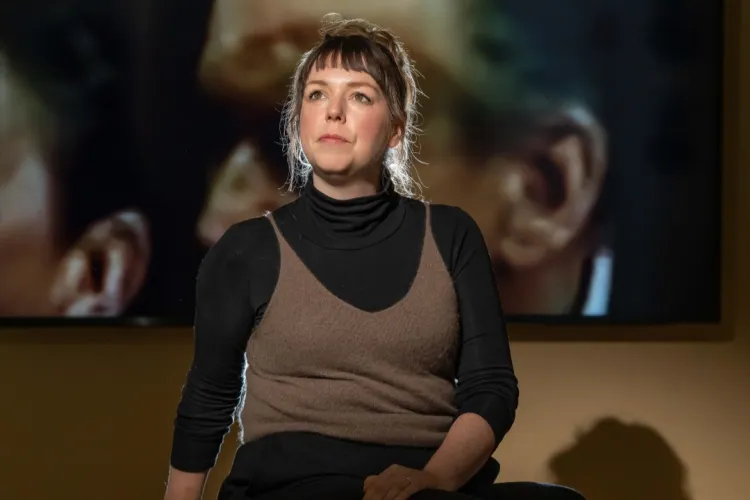
Filmmaker Jenny Brady examinethe the relationship between language and meaning in ‘The Glass Booth’ (photo by Aly Wight).
The Rupture: No condition is permanent, featuring work from 16 international artists, is now open at the University's Talbot Rice Gallery until 13 February 2027.
Conceived as an urgent response to Canadian Prime Minister Mark Carney’s high-profile address at Davos in January 2026, the exhibition echoes his declaration that the world is ‘in the midst of a rupture’.
Developed in just nine months, the exhibition brings together artists responding to the profound political, social and economic changes reshaping people’s lives around the world.
Changing worlds
Using film, photography, sculpture and sound, the artists question the systems that shape life through experiences of conflict, misinformation and technological transformation.
Canadian filmmaker Astra Taylor brings philosophical conversations into everyday settings in Examined Life, with influential voices including Cornel West and Judith Butler sharing their perspectives on the modern world.
The film’s exploration of collective responsibility echoes Taylor’s recent book End Times Fascism, a New York Times best-seller co-authored with acclaimed writer Naomi Klein.
Power struggles
In his film Terrible Simplifiers, Dublin-born Eoghan Ryan explores how public signs and symbols communicate meaning, with animated images and phrases questioning how complex realities are reduced to divisive slogans.
UK artist Carey Young explores how institutions shape behaviour and how women encounter and exercise power, with her film Appearance featuring portraits of 15 women judges, while Report of the Legal Subcommittee draws on UN discussions about the legal definition and ‘ownership’ of space.
Finding hope
Gazan-born Taysir Batniji offers hope in No Condition is Permanent, a sculpture of stacked soap bars engraved with the same phrase in Arabic. Visitors can take a bar away, gradually transforming the piece through sharing.
Artist Tarik Kiswanson, whose parents sought aslyum in Sweden, explores belonging in The Conservatory, following children from immigrant backgrounds in Paris as they learn the EU anthem, Ode to Joy, on piano.
Disrupted dialogues
In Erased Slogans, Filipino artist Kiri Dalena removes protest messages from photographs held in the Manila Chronicle archive, highlighting censorship while leaving space for future voices.
Irish filmmaker Jenny Brady examines interpretation and the delicate relationship between language and meaning in The Glass Booth.
Drawing on encounters including a meeting between Ronald Reagan and Mikhail Gorbachev, the film reveals the responsibility involved in communicating another’s words.
Shared inheritance
In Dawn Chorus, Slovenian Jasmina Cibic considers migration and colonial history, reimagining the appearance of birds native to countries beyond Europe and the US, in equisite marble reliefs and a birdsong soundscape.
Scottish-based artist Margaret Salmon’s Alcove, created specially for Talbot Rice Gallery, combines family military archives, Glasgow street photographs and everyday objects to explore how conflict passes through generations.
Working lives
Drawing on her experience in a Beijing office, Song Ziwei uses mist, light, electronic systems and office blinds in Echo Valley, an immersive installation evoking workers’ isolation during the pandemic.
Li Yifan explores the lives of Chinese migrant workers in Why Not Dance, combining documentary filmmaking with an AI-assisted animated rap video to share workers’ experiences of insecure employment.
Ongoing conflict
In 'Security Guarantees' Ukrainian artist Zhanna Kadyrova traces the journey of 'The Origami Deer', a sculpture evacuated from eastern Ukraine in August 2024, reflecting on displacement and the survival of culture during war.
Dasha Chechushkova’s drawings and etchings also reflect the impact of the Ukrainian conflict, including designs for a memorial garden honouring lost friends, created during a residency at Edinburgh Sculpture Workshop.
Cultural bonds
British German cultural activist Claudia Zeiske honours the food and cultures of communities experiencing conflict in Combat Cooking.
Beginning with Ukraine, the project now includes more than 20 countries, with a new recipe booklet illustrated by Edinburgh College of Art students on display.
We wanted to respond quickly to a world changing around us, creating space for artists to share perspectives that can be overlooked in increasingly difficult daily headlines. The exhibition confronts difficult realities, often through deeply personal experiences, but also offers hope, humour and generosity. We hope visitors will find connections with their own lives and leave with a sense that, even in uncertain times, we all have a part to play in shaping what comes next.
Professor Tessa Giblin
Director of Talbot Rice Gallery